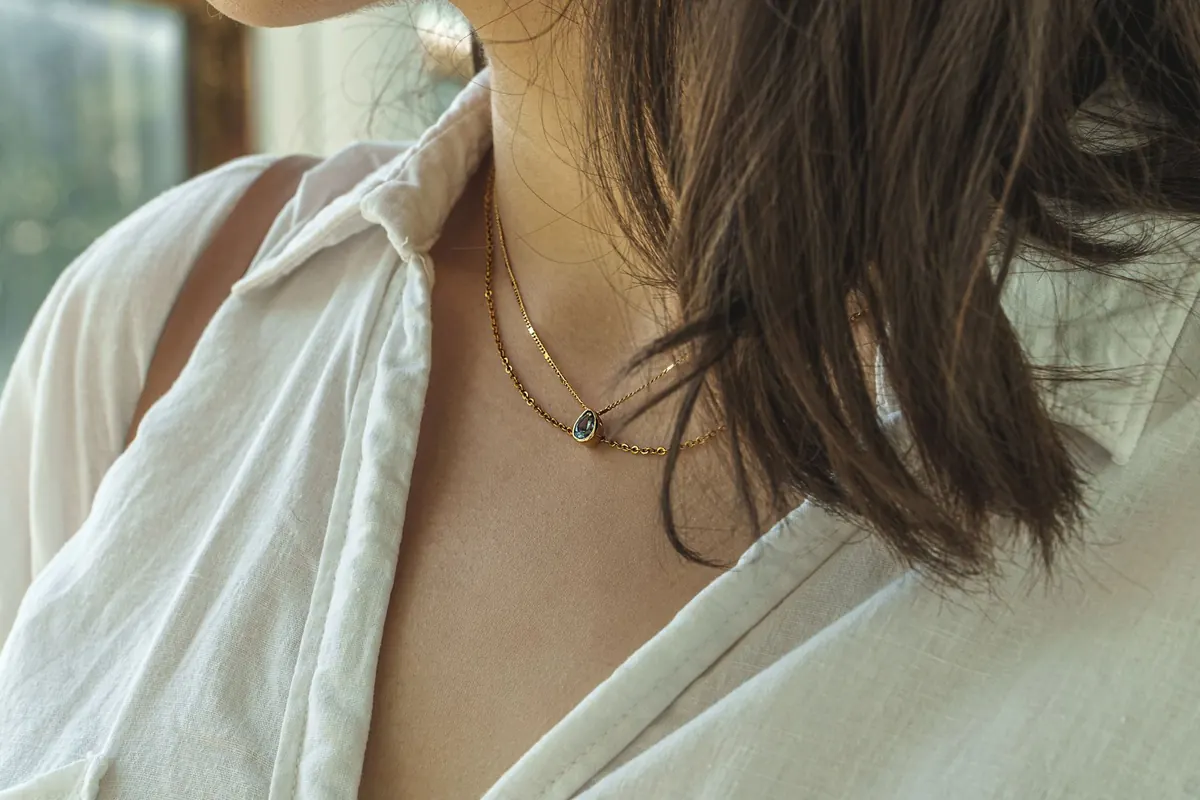
An opal ring and an opal pendant can be cut from the same rough, set by the same hand, and still live completely different lives. One goes through car doors, keyboard shortcuts, laundry baskets and the handle of a shopping bag. The other rests against a collarbone and mostly stays out of the way. If you are choosing a first opal piece — or deciding which of two you will actually wear — the useful question is not which one is more beautiful. It is which one you will still be glad to own after two years of ordinary Tuesdays.
Opal sits roughly between 5.5 and 6.5 on the Mohs hardness scale, softer than quartz and far softer than sapphire or diamond. It is also brittle rather than tough, which means it chips and crazes more readily than it scratches. That one fact shapes almost everything that follows.
Where the Stone Sits Decides Almost Everything
Jewelers tend to think about wear as a matter of exposure, and exposure is mostly about location. A ring puts a stone on the busiest part of your body. Hands hit doorframes, reach into bags, grip tools, pry open lids and get caught in drawers dozens of times a day. A pendant hangs from a chain. The stone is held at the top, sometimes at both ends, and swings with your movement instead of driving into things. The metal still takes knocks, but the impact usually arrives at a shallow angle and rarely with your full body weight behind it.
Gravity matters too. A ring is pressed against whatever surface your hand lands on. A pendant simply moves out of the way. This is why a delicate opal that would be reckless in a ring can be perfectly sensible at the end of a chain, and why the same stone in a ring needs a much more protective setting to survive the same years.
Durability: Rings Take the Hits
Why rings wear faster
Think about the last time you closed a car door, lifted a cast-iron pan, stacked chairs or pushed a shopping trolley through a tight aisle. Your knuckles and the back of your hand were leading. An opal cabochon set high on a ring sits exactly where those small collisions happen, and its domed surface concentrates the force of a knock into a tiny area. Add a hard stone countertop, a tiled floor or a concrete step and a chip can happen in a second that took a cutter hours to polish.
Rings also suffer slow wear rather than sudden damage. Prongs thin, settings loosen, and a stone that once sat snug begins to rattle slightly. That looseness is what turns a minor knock into a lost or broken opal.
Settings that buy you margin
- Bezel setting: a continuous metal rim around the edge of the stone. The best protection available for an opal, and it hides the girdle, which is the most chip-prone part.
- Low-profile or flush setting: the stone sits close to the finger, so there is less to catch. Less dramatic in profile, much calmer in daily life.
- Prong setting: shows the stone most openly, but the prongs themselves snag on knitwear and hair, and the edges are exposed.
- Halo and cluster designs: many small edges and joins near the opal, so more places to catch and more to inspect when you clean.
- Doublets and triplets: a triplet topped with a quartz cap is more resistant to scratching than a solid opal, but the glued layers dislike soaking. A solid opal is more valuable and more repairable.
Pendants are not indestructible
The weak point moves from the stone to the hardware. Clasps fail, thin chains snap, and a bail can wear through over years of the same small friction. A pendant also swings, so it can knock against a desk edge when you lean forward or catch on a seatbelt. A bezel-set opal on a chain with a sturdy clasp is about as safe as opal jewellery gets — though a closed back protects the stone at the cost of some light through it, which changes how the colour reads.
Visibility: Who Actually Sees the Colour
Opal play-of-colour depends on light and angle, which makes placement a visual decision as much as a practical one. A pendant sits at conversation height, near the face, and catches daylight from windows, overhead lamps and the sky. It is the piece other people notice. A ring is seen mostly by you, at close range, in whatever light your desk or kitchen happens to offer, and it flashes while you write, drive or gesture.
There is a scale difference worth knowing. A pendant can carry a noticeably larger stone without feeling heavy on the hand, so if you want a big flash of colour, a necklace gives you more of it for the same physical weight. A ring, by contrast, delivers its colour in short private glances all day. Neither is better; they suit different temperaments.
Comfort and the Habits of a Normal Week
Fingers change size. Heat, salt, long walks and early mornings all shift a ring's fit, so a band that is comfortable in July may spin loosely in February. A spinning ring is not just annoying — it knocks against whatever your hand touches. If you wear the ring on your dominant hand, expect roughly double the wear of the other side.
Pendants bring their own small frictions: chain length changes everything (a shorter chain keeps the opal clear of necklines and seatbelts, a longer one lets it swing into bag straps), fine chains can pull, and long hair finds clasps. Sleeping in a pendant is usually harmless but hard on the chain; sleeping in a ring is hard on both the ring and your finger.
For either piece, a simple rule covers most accidents: take it off before the gym, the pool, the shower, the garden and any session of moving furniture.
Care: Two Slightly Different Routines
Skip the ultrasonic cleaner and the steam cleaner entirely, and ignore the old advice about soaking opals in water or oil. Water can reach the glue line of a doublet, and many Ethiopian opals are hydrophane, meaning they absorb liquid and temporarily change appearance. Keep both pieces away from household cleaners, perfume, hairspray and chlorine.
- Wipe the stone with a soft, dry or barely damp cloth after wearing, then dry it immediately.
- Once a month, check a ring's prongs and bezel with a fingertip and a magnifier; check a pendant's bail, jump ring and clasp.
- Store each piece in its own soft pouch or compartment so harder jewellery cannot scratch the opal.
- Remove rings for chores and pendants for sports, and put both on last when getting ready, after lotions and scent.
- Have a jeweler inspect the setting once a year if the piece is worn often.
Choosing Between the Two
Choose a pendant if this is your first opal, if your hands are busy all day, if you work with tools or children, or if you want the largest and most visible stone you can comfortably wear. Choose a ring if you want to see the colour yourself rather than lend it to other people, if your days are mostly at a desk, and if you are genuinely willing to take it off for dishes, cleaning and gardening. A bezel-set ring with a moderate dome is the version that survives real life best.
The Practical Answer
For everyday wear, the pendant wins on durability, comfort and peace of mind, and it is the piece most people should buy first. The ring wins on intimacy — there is nothing quite like catching that flash of green and orange on your own hand at a red light. If you love both, let them do different jobs: a bezel-set opal pendant for daily life from Monday to Saturday, and a ring for evenings, weekends and the days you remember to leave it at home before doing the washing up.
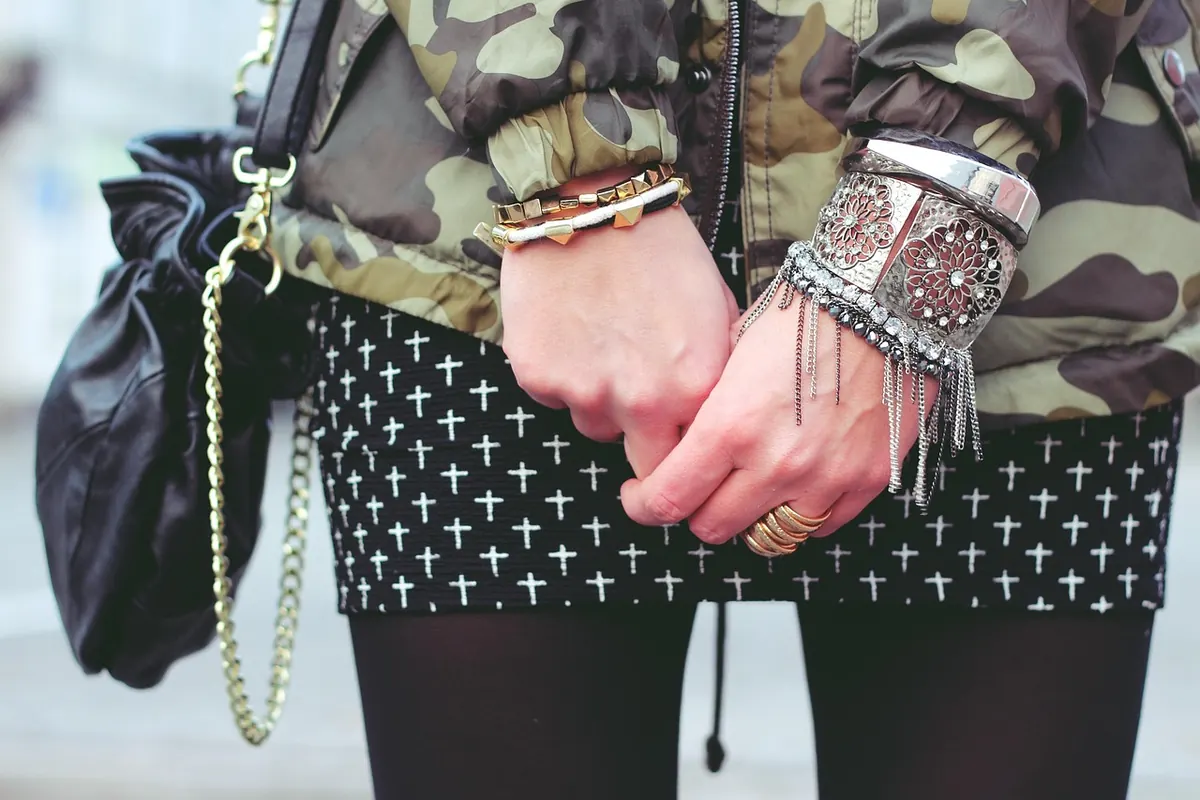
Photo: gusat silviu / Pexels