Summer light is generous and unforgiving at the same time. It flattens heavy jewelry and makes pale stones look like they were made for the season. The black opals that sit so well against velvet in December can feel like too much at a garden lunch in July. What works now is lighter: white and crystal opals, minty greens, sky blues, the milky stones with a flash that shows up in shade as well as sun.
This is a styling guide, not a shopping list. It covers which opal bodies read well in bright weather, color combinations you can copy from your own closet, and a few layering and care habits that keep pale stones looking sharp through August.
Pick a Light-Bodied Opal First
Opal is graded on a body tone scale from dark to white, and summer is the moment for the pale end. A white or crystal opal lets the play-of-color do the talking; you can wear it with a linen shirt and no other accessories and it still reads as deliberate.
Crystal opals are the translucent ones, and they are especially good in warm weather because they pick up the color of whatever sits behind them — skin, fabric, a tan. Against bare skin they look almost wet, which is exactly the effect you want at a beach restaurant.
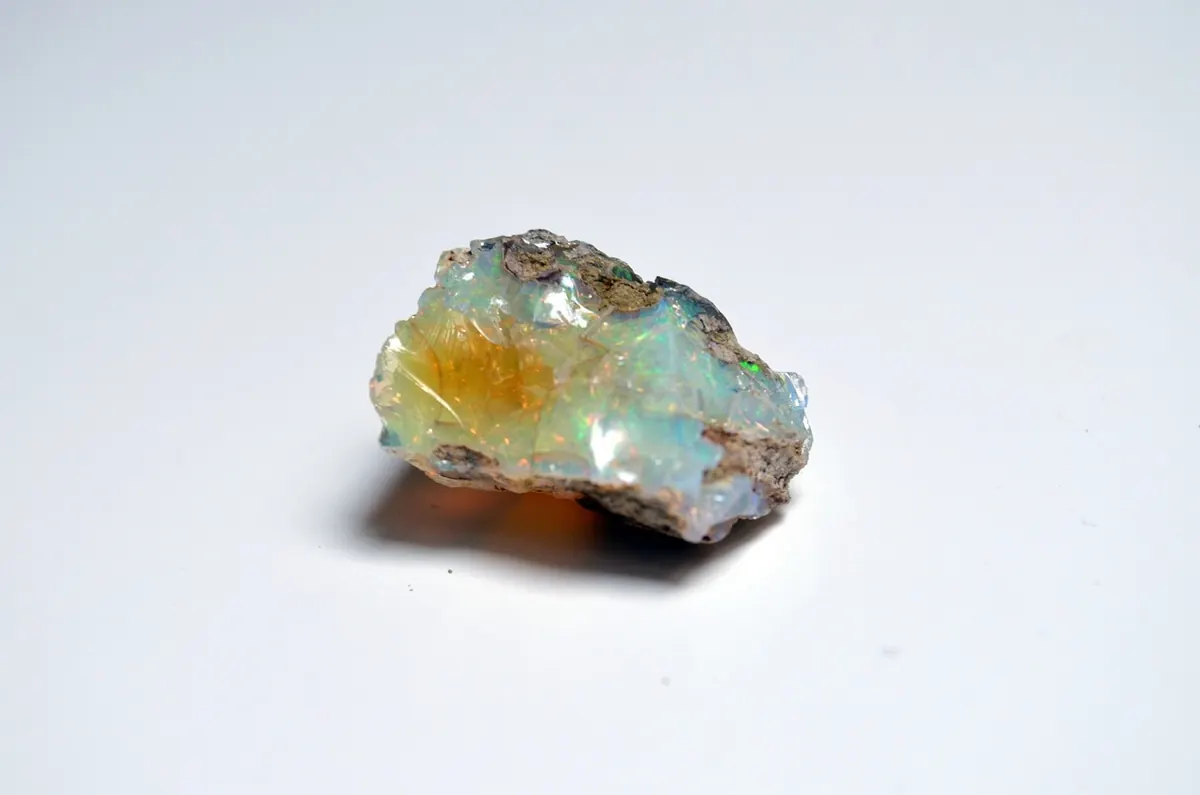
If your heart is set on a darker stone, don't shelve it. Move it to evening, when the light drops and a dark body tone finally has something to contrast with. And if you own an Ethiopian opal, check whether it is hydrophane before you plan a poolside outfit; many absorb water and shift appearance temporarily, so they belong in the shade with a glass of something cold, not in the sea.
Five Color Pairings That Work in Daylight
Bright sun washes out subtlety, so the goal is contrast by texture rather than contrast by color. These combinations hold up:
- White opal with linen white, oatmeal and pale sand. A near-monochrome outfit where the only shine is the stone. Keep the fabrics matte and slightly rumpled; the opal needs something quiet to sit against.
- Crystal opal with chambray and sea-glass blue. The blue flash in the stone finds an echo in soft denim, faded cotton, pale chambray. This is the easiest pairing on the list and the one most likely to earn compliments.
- Mint and pale green opal with camel, ecru, tobacco. Green against warm tan is a summer classic for a reason. A mint opal pendant over a camel knit or a sand-colored dress looks considered without looking styled.
- Boulder opal with white cotton and indigo denim. Boulder opal carries its ironstone backing, which makes it a little earthier and a little more casual. It suits a heavy white tee and a denim jacket far better than a silk blouse.
- Pink and peach opal with coral, blush and soft terracotta. Keep the clothing matte and the tones close together. If the fabric is also shiny, the effect gets syrupy fast.
One rule of thumb: choose the outfit first, then the opal that repeats one of its colors. Pairing backwards — buying a necklace and then hunting for clothes to match — rarely ends well.
Build the Layer in Four Steps
Summer layering is about air, not volume. Chunky stacked chains look heavy against bare skin and thin straps. Instead, build something fine and slightly irregular.
- Start with one anchor chain. A fine cable or box chain, 42 to 45 cm, sitting at the collarbone. This is the piece you would wear alone if the rest came off.
- Add a second chain at a different length. Two to four centimeters longer or shorter is enough to create separation. Any more and the two necklaces stop reading as a set.
- Let the opal sit lowest. The pendant should be the final point of the composition, the thing the eye lands on. If another charm hangs below it, the opal loses its place.
- Stop at three pieces. If you want a fourth element, move it to the ears — a small opal stud or a thin hoop — rather than adding another necklace.
Mixing metal tones works if you repeat one of them. Two silver chains and one rose gold, or two warm tones and one cool. A single stray metal in a three-piece stack reads as indecision rather than style.
Metals, Chain Weights and Scale
Silver and white gold flatter cool-toned opals — blues, greens, whites — and they feel cooler against summer skin. Rose gold is the natural partner for pink, peach and lavender stones, and it warms up a pale outfit that might otherwise look washed out. Yellow gold sits somewhere in the middle and works with almost everything, especially if you keep the chain thin.
Scale matters more than metal in hot weather. A pendant much larger than a thumbnail starts to look like armor when you are wearing a sleeveless dress. Save the big statement stone for a winter coat, or for an evening when the outfit is plain and dark.
Adjustable chains with a short extender are worth seeking out. Necklines change constantly in summer — boat necks, halter straps, open collars — and an extra few centimeters of length often solves a pendant that keeps disappearing under fabric.
Three Summer Situations, Three Formulas
Daylight lunch outdoors
White cotton dress, one crystal opal pendant on a fine silver chain, small studs. Nothing else. Sunglasses and a straw bag are the accessories; the jewelry stays quiet so it can catch the light.
Garden dinner as the sun drops
Swap the single chain for a two-piece stack — one plain, one with a mint or green opal — and add a thin bracelet on the arm that does the most gesturing. If the dress is dark, this is the moment to bring out a darker-bodied stone.
Office to an evening drink
Start with a boulder opal ring and plain studs for the working day. Before you leave, add the pendant and a second chain from your bag. A small zip pouch with two pieces in it turns one daytime look into an evening one without a change of clothes.
Heat, Sun and Water: Care That Matters in July
Opals contain water, which is part of what gives them their look and also part of what makes them sensitive. A few habits make a real difference over a summer:
- Put sunscreen and perfume on first, let them dry, then put jewelry on. Residue dulls a polished surface quickly.
- Take rings and bracelets off before swimming, showering or gardening. Chlorine, salt and soap film are all unkind to a soft stone.
- Avoid sudden temperature changes. A stone left on a hot car dashboard and then cooled by air conditioning is being asked to do something it does not enjoy.
- Skip ultrasonic and steam cleaners. Clean opals with a soft, barely damp cloth and dry them gently.
- Store pieces in a soft pouch, separate from harder stones that could scratch them.
If a stone is valuable or has sentimental weight, have a jeweler check the setting once a year and ask about insurance. That is a conversation worth having properly rather than guessing at — a professional can tell you what your specific piece needs.
Your Summer Opal Edit
You do not need much. Three pieces cover nearly everything: one fine chain with a pale opal pendant, one pair of small opal studs, and one ring you can wear every day. Add a second chain if you like layering, and a darker stone if you have evenings that call for it.
Before the season starts, lay the pieces on a white cloth in daylight and photograph them next to two or three of your favorite summer outfits. What looks right on the cloth usually looks right on you, and the photo saves you from standing in front of a mirror at seven in the evening wondering why a necklace feels off.
Then wear them. Opals are not delicate to the point of being unwearable — they simply reward a little attention when it comes to heat, water and where you leave them at the end of the day.
Photo: Harper Sunday / Pexels