An opal ring can live comfortably on a working hand for years, or chip in a single season. The difference is rarely the stone itself. It is almost always the setting: how much of the opal is wrapped in metal, how high it rides above the finger, and what happens on the day you forget you are wearing it and reach for a door handle.
Opal is not as delicate as people assume. It is simply a stone with a specific set of weaknesses, and a good setting is designed around them. Here is how to choose one you can actually wear.
What You Are Actually Protecting
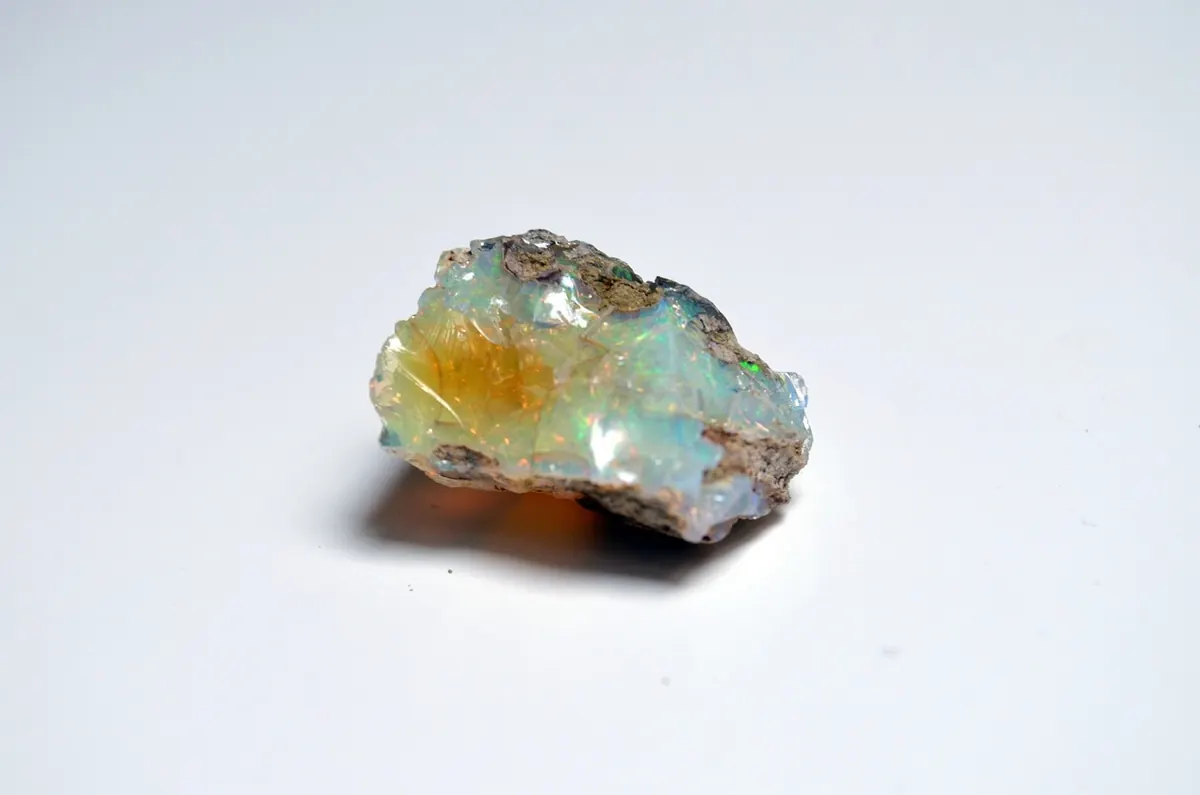
Opal sits around 5.5 to 6.5 on the Mohs hardness scale, softer than quartz and far softer than sapphire. But hardness is only half the story. Opal is brittle. It chips at the edges, cracks under a sharp knock, and can craze — develop a network of fine surface cracks — when it dries out or meets rapid temperature change.
It also holds water, typically a few percent, which is part of what makes the play of colour possible and part of what makes the stone sensitive to heat, steam and long soaking.
Most opals used in rings are cut as cabochons, with a domed top and a flat or gently rounded base. The vulnerable areas are the dome itself and, above all, the girdle — the rim where the dome meets the base. A knock there can lift a flake of stone. So the setting has one straightforward job: keep the girdle covered, keep the dome low, and put metal where your hand is most likely to meet the world.
If you are setting a doublet or triplet — a thin slice of opal glued to a backing, sometimes with a clear cap on top — the edges deserve even more respect. The bond line and the thin top layer are weak points, and open prong settings leave them exposed.
Three Factors That Decide Almost Everything
Forget setting names for a moment. Most of the protection comes down to three measurable things.
- Coverage. How much of the stone's edge is enclosed in metal. A full bezel covers the entire girdle. A four-prong setting covers almost none of it.
- Height. How far the dome rises above the surrounding metal and above the finger. A stone sitting two millimetres proud is a different risk from one sitting six.
- Metal mass. A thick bezel wall, a solid gallery, a band with real substance. Thin metal bends, and when it bends it lets go of the stone.
Every setting style is a different combination of these three. That is the honest way to compare them.
Setting Styles, Compared for Daily Wear
Full bezel
The most protective option, and the one most jewellers steer people toward for an opal ring worn regularly. A rim of metal is pushed over the girdle all the way around, so there is no exposed edge for a countertop to catch, and the stone sits lower by design.
A bezel is only as good as its wall thickness. Very thin bezels, common in lightweight silver designs, wear through or deform over years. Ask for enough metal to hold its shape, and check that the top edge is rounded and smooth rather than filed sharp. Sharp inner edges concentrate pressure on the opal.
The trade-off is visual. A bezel frames the stone, and some people prefer to see the full outline of the opal with light coming in at the sides.
Semi-bezel or partial bezel
Metal covers part of the girdle — often the two ends of an oval — while the sides stay open. You get much of a bezel's protection with a lighter, more open look. Good for ovals and freeform cuts, provided the open sections sit where they are least likely to be struck.
Flush and gypsy settings
The stone sits down inside the metal, its surface roughly level with the face of the ring. For a small round or oval opal in a band, this is close to bombproof: there is very little to catch, and the surrounding metal absorbs knocks. The opal shows off less, and the style suits smaller stones better than large ones.
Halo settings
A ring of small stones or metal around the centre opal. A halo genuinely helps: it forms a raised bumper that takes impacts before the opal does. It also adds edges that catch on knitwear, so keep the halo close to the stone and judge the overall height carefully.
Prong settings
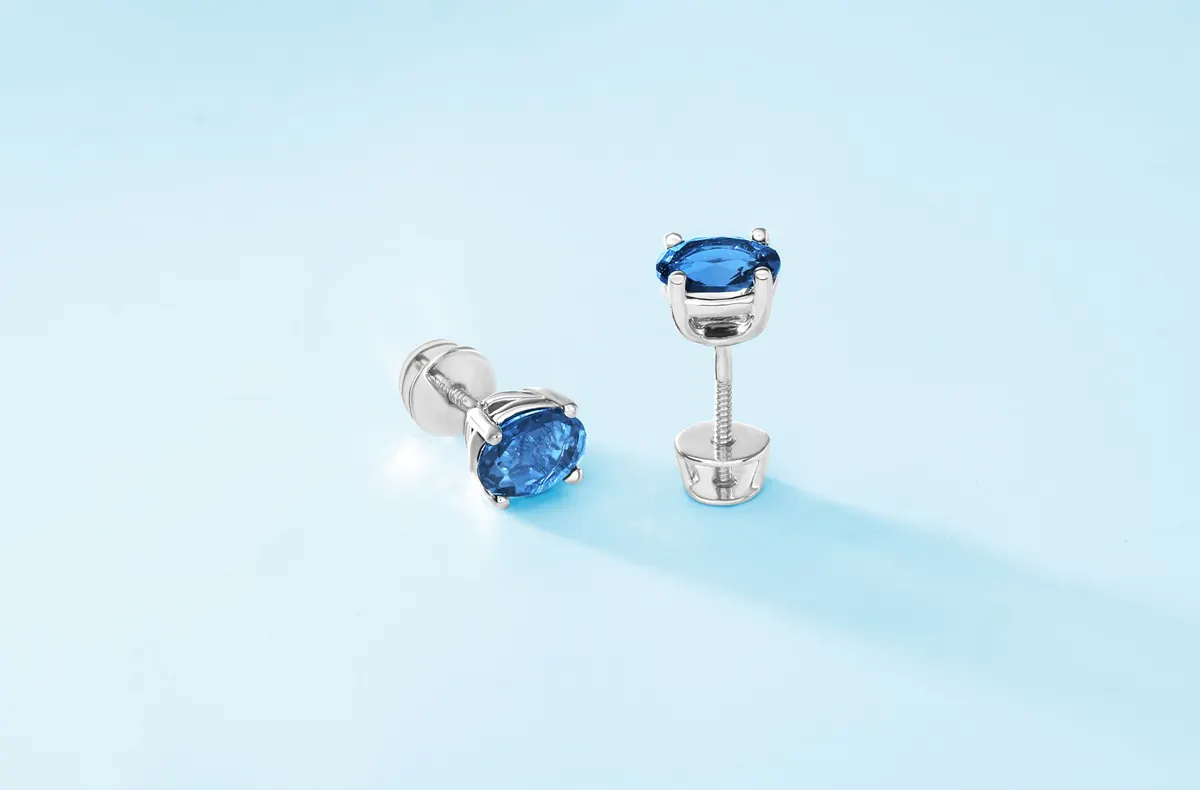
Classic, open, and the least protective of the common options. Prongs leave the girdle exposed and create snag points; a lifted prong catches on clothing and bends. If you love the look, make these choices:
- Ask for low, rounded prongs rather than tall claws.
- Prefer a basket with a gallery rail — a horizontal band of metal under the stone that stops the prongs from spreading.
- Keep the stone as low as the cut allows.
- Have the prongs checked once a year. Opal prongs loosen quietly.
Tension and channel settings
Beautiful in photographs, unforgiving in practice. Tension settings rely on the spring of the metal and are generally reserved for tough stones. A channel grips a stone along two parallel walls, which can work for small calibrated opals, but the exposed ends still take hits. For a large or valuable opal, neither is a sensible everyday choice.
A Checklist Before You Commit
Setting choice starts before the design does. Answer these honestly.
- How often will you wear it? Daily wear on a working hand calls for a bezel. Occasional evening wear allows far more freedom.
- What does your hand do all day? Gardening, gym equipment, lifting boxes, resting your hand on a keyboard edge — each points to a different risk.
- How domed is the stone? A high cabochon needs more metal around it or a deeper seat.
- Is it a solid opal, a doublet or a triplet? Ask plainly. The answer changes how much edge protection you need.
- Can the ring be resized? Full bezels and patterned shoulders can be difficult to resize. If your finger size may change, discuss it now rather than later.
- Will it be worn beside other rings? A neighbour with sharp edges will wear against the setting. Consider a spacer band.
Small Design Details That Add Real Protection
A few millimetres of thoughtful design do more than a long list of features.
A substantial band. Around two millimetres thick at the base is a reasonable starting point for daily wear. Thin shanks flex, and flexing shanks loosen settings.
Sloping shoulders. Metal that rises gradually toward the setting shields the stone from sideways knocks and looks better than a hard step.
A closed or partly closed back. It protects the underside of the stone, but it also traps dust and moisture. A solid opal does not need to breathe, so a closed back is fine — as long as you accept that cleaning takes a little more care.
Metal Choice Matters More Than You Think
Fourteen and eighteen karat gold and platinum are the usual sensible choices for a stone you plan to wear hard. Platinum is dense and holds a bezel with remarkable reliability. Yellow and rose golds keep their shape well.
White gold is usually rhodium plated. The plating wears at the high points of a setting over time, showing as a faint yellowish or grey tint, and needs renewing occasionally.
Sterling silver is perfectly workable, and many opals look wonderful in it, but it is softer. A delicate silver bezel on a daily-wear ring will thin and deform faster than the same design in gold. If you choose silver, choose a heavier version of the design.
Living With an Opal Ring
The setting does most of the work, but not all of it. Treat the ring as jewellery rather than armour: take it off for gardening, heavy lifting, dishes and swimming, and put it somewhere consistent so it does not end up loose in a pocket.
Avoid sudden temperature change — a hot tap, a steamy bathroom, a cold windowsill in winter. Clean with lukewarm water, a soft cloth and a little mild soap, and skip ultrasonic and steam cleaners unless your jeweller knows the stone and says otherwise. Store opals separately so harder stones cannot scratch them.
Have the setting checked once a year, and keep an appraisal and insurance cover current if the ring matters to you; a jeweller or insurer can advise on what is appropriate for your circumstances.
Chosen well, an opal ring is not a fragile ornament you rarely dare to wear. It is a ring that happens to hold a soft, brilliant stone at its centre — with enough metal in the right places that you stop thinking about it.
Photo: jeanborges / Pixabay