An opal rarely loses its fire because something is wrong with the stone. More often it's a thin film of hand cream, hairspray and dust sitting on the surface, dulling the play of color. Ten minutes with a bowl, a drop of soap and a soft brush will bring most of it back. The catch is that opal is one of the few gemstones where the wrong product can cause damage you cannot undo. This routine is built around that fact: gentle tools, short contact with water, and a short list of things that should never touch the stone.
First, Know Which Kind of Opal You Own
Cleaning advice only makes sense once you know what is actually in the setting, because solid opals and assembled opals behave differently around water.
A solid opal is a single piece of natural opal, cut and polished. It is the most forgiving of the three main types, but it is still soft: roughly 5.5 to 6.5 on the Mohs scale, softer than the quartz dust that settles on a windowsill and far softer than the diamond in an engagement ring.
A doublet is a thin slice of opal glued to a backing, usually ironstone or black potch. A triplet adds a clear quartz or glass cap on top. In both, the bond is the weak point. Soaking softens the adhesive over time, and heat can lift it outright, which is why assembled stones get wiped rather than washed.
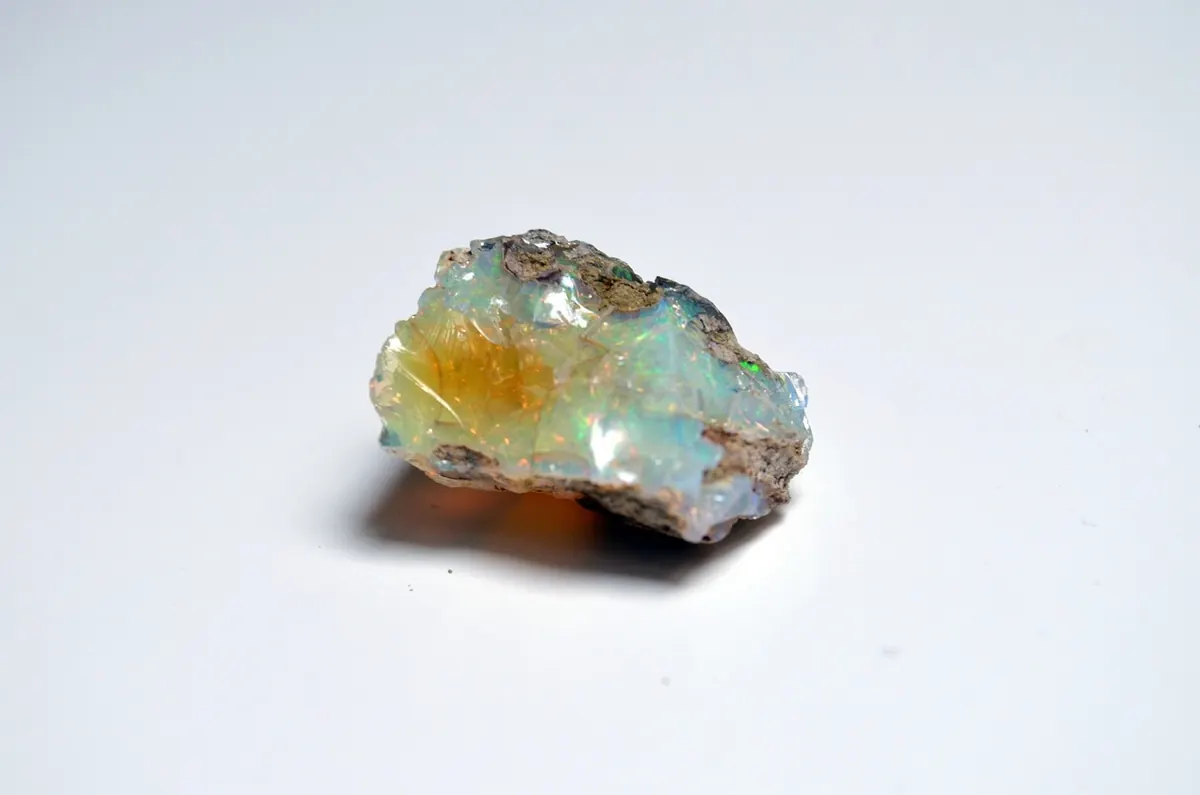
There is one more category worth checking: some Ethiopian opals are hydrophane, meaning they absorb water. A hydrophane stone can turn almost clear while wet and slowly regain its color as it dries. It also absorbs oils, perfume and soap, which can leave stains that never come out. If your opal came from Ethiopia and you are not sure whether it is hydrophane, treat it as if it is: no soaking, barely damp cloth only.
The Gentle Cleaning Routine, Step by Step
Gather everything before you start, so you are not hunting for a cloth with a wet stone in your hand.
- A small bowl of lukewarm water
- One drop of mild, uncolored dish soap, with no moisturizers or added scent
- A soft brush: a baby toothbrush, a clean makeup brush, or a soft paintbrush
- Two lint-free microfiber cloths
- A folded towel to work over
- Set up over a towel. Work above a folded towel, and if you are near a sink, put the plug in first. Opal is slick when wet, and a dropped stone on tile usually means a chipped girdle.
- Mix the bath. Fill the bowl with lukewarm water and add a single drop of soap. Swirl it with your finger. Keep the water close to room temperature; a cold stone hit with warm water is a thermal shock it does not need.
- Soak only if it is a solid opal, and only briefly. Two or three minutes is plenty. Never leave a piece soaking overnight. Doublets, triplets and any stone you suspect is hydrophane skip this step entirely: dampen a cloth instead and go straight to brushing.
- Brush the setting, not the face of the stone. Use short, light strokes around the prongs, behind the setting and in the gap where the metal meets the opal, which is where soap scum and dust collect. The flat top of a cabochon usually needs nothing more than a wipe.
- Rinse gently. Dip the piece in a second bowl of clean lukewarm water, or wipe it down with a damp cloth. Do not hold it under a hard-running tap.
- Pat dry, then let it rest. Blot with a microfiber cloth rather than rubbing. Leave the piece on a dry cloth for twenty to thirty minutes so any moisture trapped under the setting can evaporate before it goes back in a box.
If your tap water is very hard
Mineral-heavy water can leave a chalky film on a polished surface, especially in the hollows around prongs. Use filtered or bottled water for the rinse if your kettle furs up quickly. It costs nothing and saves a second cleaning.
What to Keep Away From Your Opals
The list of things that damage opal is longer than the list of things that help, but it is easy to remember once you understand the two reasons behind it: opal is soft, and opal contains water.
- Ultrasonic cleaners. The vibration can loosen a doublet or triplet bond and shake a stone out of a tired setting, and the cleaning solution creeps into places you cannot dry.
- Steam cleaners. Heat and pressure together are the worst combination for a hydrated stone.
- Household chemicals. Bleach, chlorine, ammonia, acetone and nail polish remover, vinegar and lemon juice. Even brief contact can etch a polished surface.
- Abrasives. Toothpaste, baking soda paste, cream polishes and commercial jewelry dips all cut into the finish.
- Liquid silver dips on any piece where the opal is set. The liquid reaches parts of the metal you cannot rinse.
- Direct heat. Hairdryers, radiators, sunny windowsills and hot cars. Rapid drying is what causes crazing, the network of fine cracks that never goes away.
- Cosmetics and pool water. Perfume, hairspray, sunscreen, hand sanitizer and chlorinated water. Put jewelry on last when you get ready and take it off first when you get home.
Cleaning the Metal Without Harming the Stone
Most of the dirt you can see is on the metal, and that part can be cleaned properly. On silver, use a soft silver polishing cloth and keep it on the metal only, away from the opal. Impregnated cloths leave a residue that lodges in the surface of the stone and dulls the fire. For gold, the soapy water routine is enough.
Two things to avoid: never use a pin, needle or toothpick to dig dirt out from under the setting, and never pry at the stone to check whether it is tight. If a prong looks lifted or the opal rocks slightly in its seat, stop cleaning and take it to a jeweler. A loose stone is a five-minute repair and a lost stone is not.
Drying and Storing So It Stays Bright
Opal holds a small amount of water, roughly three to ten percent, and it does best in ordinary indoor conditions. Very dry environments are the enemy: a safe deposit box, a dehumidified room or a shelf above a radiator will dry a stone out over months. Store opal in a soft pouch or a lined compartment, away from diamonds, sapphires and quartz, which will scratch it in a crowded jewelry box. A zip bag is fine for travel; just do not seal a piece away for a year.
A stone worn regularly tends to look better than one shut in a drawer, partly because it picks up moisture from skin and air. Wear the ring, enjoy it, and give it a quick wipe with a dry cloth after each wearing. That single habit prevents most of the buildup you would otherwise be scrubbing at.
A Short Checklist Before You Put It Away
Wipe the stone with a dry microfiber cloth after wearing. Keep the piece out of the bathroom while you shower and away from the sink while you do dishes. Apply perfume, lotion and hairspray before you put jewelry on, not after. Clean with lukewarm water, one drop of mild soap and a soft brush, and skip the soak on doublets, triplets and hydrophane stones. Store it apart from harder gems, and keep it away from heat and long dry spells.
If the surface still looks cloudy after a gentle clean, if fine cracks have appeared, or if a stone has gone noticeably paler and has not recovered after a few days, stop experimenting at home. Repolishing opal takes a feel for the individual stone, and a jeweler can do in minutes what a kitchen counter cannot. For everything else, the bowl and the soft brush will keep the fire where you want it: on the stone.
Photo: OlgaVolkovitskaia / Pixabay